Most experts recommend a redesign every 2–3 years, or sooner if your industry trends or technology change quickly. Regular smaller updates in between can help you avoid a major overhaul each time.


Codent Technologies is a results-driven IT solutions company delivering reliable, scalable, and user-focused digital products. We help businesses build strong online presence, streamline operations, and grow through smart technology, clean design, and practical development solutions. Our approach is simple, transparent, and focused on long-term value..
Blog Detail
10 Signs Your Business Needs a Website Redesign
30/ 06/2026
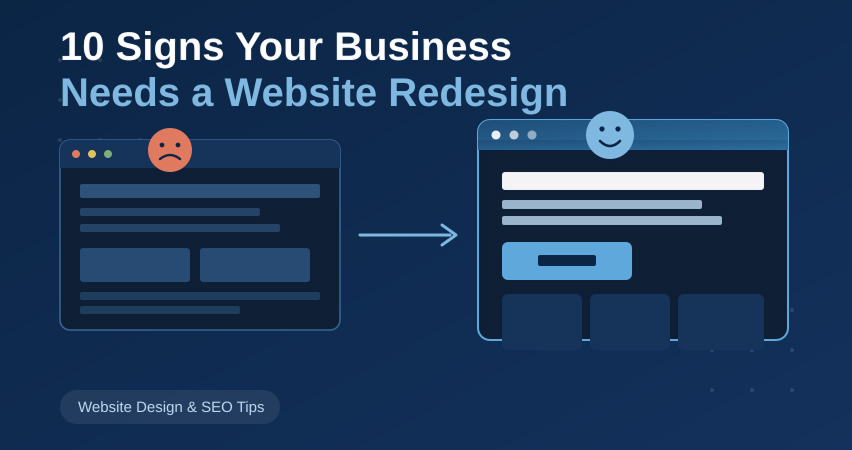
Your website is often the very first handshake between your business and a potential customer. If that handshake feels weak, outdated, or confusing, people notice, and they leave within seconds. A website redesign isn’t just about making things look pretty. It’s about making sure your site actually works for your business: attracting visitors, earning their trust, and turning them into customers.
If you’ve been putting off an update, here are 10 clear, practical signs that it’s time for a redesign, and what you can do about each one.
1. Your Website Looks Outdated
Design trends move fast. If your site still has the look and feel of 2015. Small fonts, cluttered layouts, clip-art style graphics, visitors may assume your business itself is outdated, even if that’s far from true. A modern, clean website design builds instant trust the moment someone lands on your page.
- Old-fashioned fonts, colors, or stock images that feel dated
- Cluttered layouts with too much happening on one page
- No visual consistency between your website and your current branding
- A design that simply doesn’t reflect how your business looks and feels today
2. It’s Not Mobile-Friendly
More than half of all web traffic now comes from mobile devices. If your site doesn’t adjust properly to phones and tablets, you’re losing visitors before they even see what you offer. Google also ranks mobile-friendly websites higher in search results, so this affects your SEO too.
- Text or images that overflow the screen on mobile
- Buttons that are too small or too close together to tap easily
- Pages that load differently or break on different devices
- A separate “mobile site” that feels disconnected from your main website
3. Slow Loading Speed
Every extra second your site takes to load increases the chance someone clicks away. Slow page speed doesn’t just frustrate visitors, it actively hurts your SEO rankings, making it harder for new customers to find you in search results in the first place.
- Large, unoptimized images slowing down every page
- Outdated code or unnecessary plugins running in the background
- No caching or content delivery network (CDN) in place
- Visitors bouncing before the page even finishes loading
4. High Bounce Rate
If people land on your site and leave within seconds, something isn’t working, whether it’s a confusing layout, weak messaging, or unclear next steps. A redesign focused on user experience (UX) can fix this by guiding visitors naturally toward what they came for.
- Visitors leaving without clicking to a second page
- Unclear headlines that don’t explain what you actually do
- No obvious next step once someone arrives on the homepage
- A homepage that tries to say everything at once and ends up saying nothing clearly
5. Difficult Navigation
Visitors should be able to find what they need in just a few clicks. If your menu structure is confusing, buried, or inconsistent, you’re making it harder for customers to convert, and harder for search engines to properly crawl your site structure.
- Too many menu items, or items grouped in confusing categories
- Important pages (like Contact or Services) buried several clicks deep
- Inconsistent navigation between desktop and mobile versions
- No search bar or breadcrumbs on larger, content-heavy sites
6. Inconsistent Branding
Your colors, fonts, and messaging should feel the same across every single page. If your site looks like it was built in pieces over the years, patched together by different people at different times, a redesign can unify your brand identity and make your business look far more professional.
- Different fonts or color schemes used across different pages
- Logo or tagline that doesn’t match your current branding
- Tone of voice that shifts from page to page
- Marketing materials (brochures, social media) that look nothing like your website
7. Poor SEO Performance
If your website isn’t ranking on search engines, the problem might be technical, old code, missing meta tags, poor site structure, or non-optimized content. A redesign is the perfect opportunity to fix on-page SEO from the ground up and build a stronger foundation for long-term growth.
- Missing or duplicate title tags and meta descriptions
- No clear keyword strategy across your pages
- Slow speed and poor mobile experience hurting your rankings
- Outdated technical SEO that newer competitors have already fixed
8. Low Conversion Rates
Traffic is great, but if visitors aren’t signing up, calling, or buying, your site isn’t doing its most important job. A strategic redesign with clear calls-to-action (CTAs) can turn far more of your existing visitors into actual customers, without spending extra on ads.
- Weak or missing calls-to-action on key pages
- Contact forms that are too long or feel untrustworthy
- No clear value proposition explaining why someone should choose you
- Checkout or enquiry process that feels clunky or confusing
9. Outdated Content or Information
Old blog posts, expired offers, or outdated contact details make your business look inactive, even if you’re busier than ever. Fresh, optimized content marketing keeps your site relevant, builds trust with visitors, and helps with search rankings at the same time.
- Blog posts that haven’t been updated in years
- Old pricing, offers, or promotions still listed on the site
- Outdated team photos, testimonials, or case studies
- Copyright year or contact information that’s no longer accurate
10. It Doesn’t Reflect Your Current Business
If your services, products, or goals have evolved but your website hasn’t, there’s a disconnect that customers will notice. Your site should always represent who you are today, not who you were five years ago.
- Services or products listed that you no longer offer
- New offerings missing entirely from the website
- A target audience that has shifted since the site was built
- A business that has rebranded but a website that hasn’t caught up
Final Thoughts
A website redesign isn’t an expense, it’s an investment in your online presence, your credibility, and your long-term growth. If even two or three of these signs sound familiar, it’s probably time to give your website the upgrade it deserves. The good news? You don’t have to fix everything at once. Even small, focused improvements, better mobile experience, faster loading, clearer CTAs, can make a noticeable difference in how your business is perceived online.
Frequently Asked Questions
-
1. How often should a business redesign its website?

-
2. Will a website redesign improve my SEO?
Yes. A redesign focused on speed, mobile-friendliness, clean code, and clear site structure can significantly boost your search engine rankings and help new customers find you organically.
-
3. How much does a website redesign cost?
Costs vary widely based on size, features, and design complexity, ranging from a few hundred dollars for small updates to several thousand for a full custom redesign.
-
4. How long does a website redesign take?
A typical redesign takes anywhere from 2 to 8 weeks, depending on the scope of work, the number of pages, and how much new content needs to be created.
-
5. Do I need to redesign my entire website, or can I update parts of it?
Not always. Sometimes a partial redesign, like updating the homepage, improving mobile responsiveness, or refreshing branding, is enough to make a big impact without a full rebuild.
-
6. What’s the difference between a website redesign and a website refresh?
A refresh usually means smaller visual or content updates. New images, updated copy, minor layout tweaks. A full redesign typically involves rethinking the structure, user experience, and sometimes the underlying technology of the site.
-
7. Will I lose my current SEO rankings during a redesign?
Not if it’s done correctly. A well-planned redesign preserves your existing URLs, sets up proper redirects where needed, and maintains your content’s SEO value, in most cases, rankings actually improve afterward.
Share this post with your friends

Can You find Now
Looking for the Best IT Business Solutions?
Choose Options
Want Sticky Header
- No
- Yes
Dark Verion
- Yes
- No